
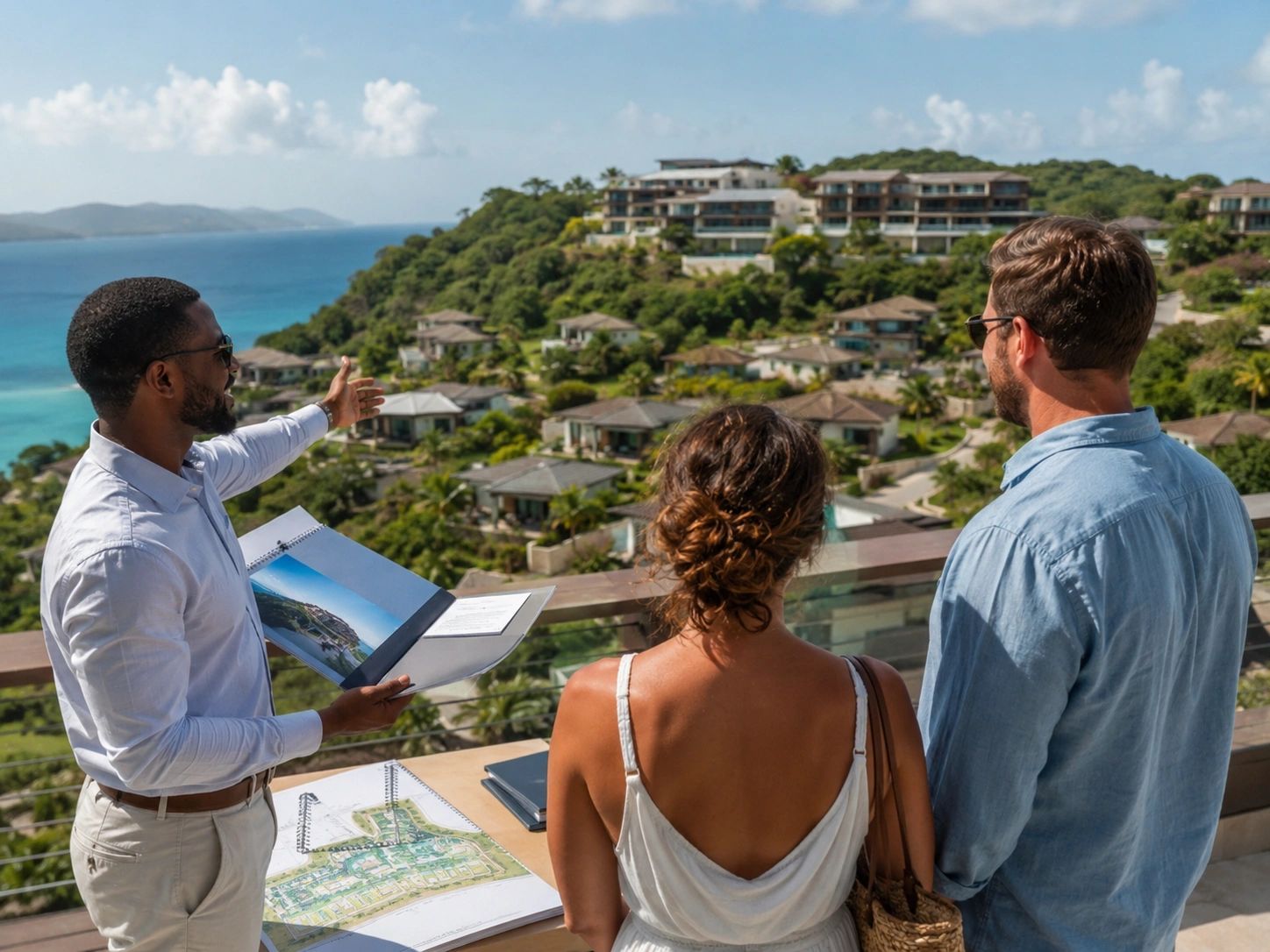
The short answer is yes. Buying into an approved development in Grenada is one of the established routes to citizenship, and for the right family it is often the better one. But "buying a property" and "buying your way to a passport" are not the same thing, and the gap between the two is where most of the misunderstandings live.
We have been involved in Grenada's programme since before its inception. Members of the Tandem team worked alongside the government and other consultants in 2012 to help structure the original framework, which became the Citizenship by Investment Act in 2013. We have been here ever since, as developers and as a marketing agent, and we still consult with government on the Act today. So this is a route we know from both sides of the table. Here is how it actually works, what it costs once everything is added up, and who it suits.
If you would rather just talk it through, Talk to Tandem and we will give you a candid read on your situation in about thirty minutes.
The three routes to Grenadian citizenship
There are three ways to apply for citizenship, and it helps to see all of them before settling on real estate:
Planning around citizenship, real estate, or a wider Caribbean move? Talk to Tandem for a private, practical conversation.
- National Transformation Fund (the donation route). A non-refundable contribution to Grenada's development fund for tourism, infrastructure, education and healthcare. The cleanest and usually the quickest path.
- An approved project (the real estate route, and the subject of this article). Rather than donating, you invest in a development the government has already approved, and you hold an interest in real property for a minimum of five years.
- The significant investor route. For developers investing US$1.5 million or more into their own project, this path is for an entrepreneur or hotelier who wants to build something on the island themselves and qualify through it.
There is a thread running through these three that matters more than the labels. One point worth understanding early: the second and third routes create a stronger connection to the country than a straight donation does. That nexus matters if you are thinking about a future US E-2 application, which we will come back to.
What you actually invest in, and what "approved" means
On the real estate route you are not just buying any house on the open market. You are investing into a development that has been specifically approved by the government for citizenship purposes. In practice these are tourism projects: resorts, branded hotels, and villa developments. The government scrutinises these projects very thoroughly before approving them and monitors them closely throughout their development cycle.
What you own depends on the structure. At the entry level you typically hold a share in the development rather than a standalone home with your name on the title deed. Invest at a higher level and you can own a unit outright. Both are legitimate; they simply suit different objectives. If your priority is the passport at the lowest qualifying figure, the shared structure does the job. If you want title documents to a property you can point to, that is the higher tier.
The real cost, once everything is added up
This is where candid advice earns its keep, because the headline number is never the number you pay.
On the approved-project route, the figures start as follows:
- A minimum investment of US$270,000 into the approved development.
- A government fee of US$50,000, which rises for larger families.
- Application, processing, and due diligence fees for each applicant.
- Local agent fees for submitting the application in approved form.
- Marketing agent fees for advising on the options, helping compile a correct and complete file, and assisting with the selection of a local agent.
- Bank fees on top of everything, at roughly one per cent of the total transaction.
To put a real number on it: on a recent quote we prepared for a family of four, the US$270,000 minimum investment came to around US$373,000 once every cost was added in. That is roughly another US$100,000 over the headline figure. None of it is hidden, but you only avoid surprises if someone lays it all out before you commit, which is exactly what we do on the first call. You can verify the official fee structure directly on the Investment Migration Agency site.

NTF or real estate: our honest opinion
We do not have a single answer we give everyone, because the right route depends on what you are actually trying to achieve.
For someone who simply wants the convenience of an alternative travel document, we may well recommend the donation route. It is cleaner, it is quicker, and there is no asset to manage or eventually sell.
For families, or for individuals who want to build a genuine bond with their new country, we often lean towards investment, whether in an approved project or as a significant investor. There is a practical reason for this beyond sentiment. Holding title to a property, opening a local bank account, having a local address, perhaps obtaining a Grenadian driving licence as secondary ID.
These are the things that turn a passport into a real connection. And that connection is what makes the difference if you later want to apply for a US E-2 visa, a route Grenada has held since its 1989 treaty with the United States. The US Department of State and USCIS both publish the requirements, and they are worth reading and understanding..
A realistic example of who chooses real estate over donation: a family who want to secure Grenadian citizenship first, and then, once they meet the requirements, use it as a bona fide pathway towards a US E-2 application. For them, the property is not an afterthought. It is part of the case they are building.
Need to apply this to your own situation? Talk to Tandem and we will help you sort the right route, risks, and next steps.
The misconceptions we hear most
Two come up again and again, and both are worth dismantling early.
The first is the belief that because you are spending your money, approval is a formality. It is not. The due diligence process is strict and comprehensive, and only genuine applicants should apply. We can guide you through it, prepare your file to the standard expected, and tell you honestly whether we think you are a strong candidate. What we cannot do, and what no honest agent can do, is guarantee approval. Anyone who promises you certainty is disingenuous.
The second is the idea that this is quick and easy. It is neither. You should expect an in-depth application that involves compiling a many documents, attending an interview before approval, and waiting patiently while the process runs its course. In our experience, once a family decides to proceed, it typically takes them and us 6 to 8 to complete the application, and then three to four months for approval, assuming there are no omissions or complications. Plan for that, rather than hoping for a shortcut.
How to judge a project and a developer
If you go the real estate route, the development you choose matters as much as the programme itself. Before committing to any project, we always ask the same questions on a client's behalf:
- Is this an experienced developer?
- Have they delivered successful projects in the Eastern Caribbean specifically, where building conditions and approvals work differently to anywhere else?
- Have they completed citizenship-linked projects before, all the way through to delivery?
- What is their reputation, both in Grenada and internationally?
Marketing brochures answer none of these honestly. Local knowledge does. Knowing which developments are progressing and which have stalled is the single most valuable thing a local agent brings to the real estate route, and it is not something you can learn from a brochure or website.
What the journey actually looks like
From the first conversation to citizenship, the path runs roughly like this:
- Choose the right country and route. For most of our clients that is Grenada, but we service all five Caribbean programmes, and the right answer depends on your goals.
- Select a marketing agent to advise and guide you through the process. That is the role we play.
- Compile your application, then appoint a local agent to submit the file, which your marketing agent will help you with.
- Submit to government and wait. If you are preliminarily approved, you will be invited to an interview, which can be held online.
- After the interview wait again for final approval, and then your citizenship is confirmed.
The two stages where delays creep in are document compilation and source-of-funds evidence. Get those right at the start and the rest tends to move. Get them wrong and you add months. We track every circular from the regulator and keep clients updated on our News page, so nobody is working from out-of-date information.
Why work with Tandem rather than a salesperson
There are large international firms that advertise heavily, and there is nothing wrong with that. But on a programme this local, presence on the ground is very helpful.
We are Grenadian. We live and work here. We know the projects and the developers personally, and we have relationships we can use to keep things moving when something needs moving. When the regulator changes a form, we hear about it the same day. When a developer's status shifts, we know before any press release. In fact, some of the big international agents work with us precisely because they need that local strength.
That is the difference between an advisor with an office in St. George's and an intermediary working from another time zone with a brochure. You can read more about how we work on our About page, and see the developments we currently work with on our Projects page, every one approved by the regulator.
Talk to Tandem
So, can you get Grenada citizenship through real estate investment? Yes, and for families building a genuine connection to the island, or with an eye on a future US E-2 application, it is frequently the route we would point you towards. The thing to get right is everything around the headline figure: the true all-in cost, the project you choose, and a file that stands up to serious scrutiny.
If you would like that mapped out for your own household, with real numbers and no pressure, Talk to Tandem.
We will tell you whether the real estate route fits your situation, and if it does not, we will tell you what does. Prefer to message? WhatsApp only: +1 (473) 415-3213 or use our Contact page.
Ready to see the full application process? Our new guide explains how to apply for Grenada citizenship by investment, from choosing a route through due diligence, interview and approval.
Applying from Dubai or Abu Dhabi? Our UAE guide explains the remote file, source-of-funds evidence, banking and an optional Grenada visit: Citizenship by Investment UAE: How to Apply from Dubai.
For the purchase itself, read our guide to buying property in Grenada as an overseas buyer, covering location, ownership costs and rental considerations.
Want this mapped around your situation?
If this article raises questions about citizenship, real estate investment, or the right Caribbean strategy for your family, Tandem can give you a private, practical read on fit, timing, and next steps.