
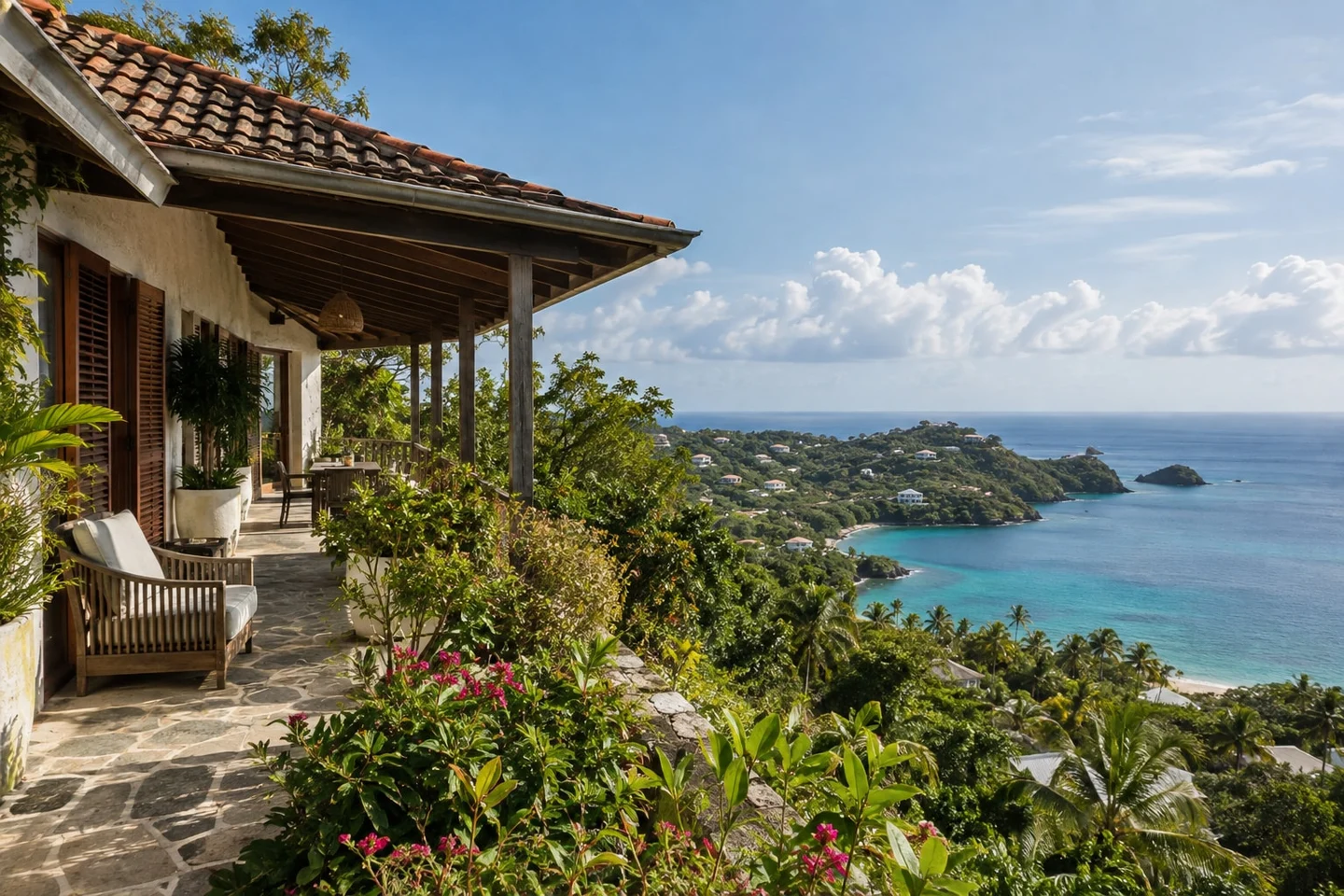
Most guides to buying property in Grenada skip the number that matters most. So let us start there.
Buy a private home here from another foreigner, outside an approved development, and the taxes on that transaction come to roughly 30 per cent. Buy inside a tourism approved development, and the same purchase can cost you under 10 per cent, sometimes nothing at all on a first sale.
That single difference shapes almost every decision an overseas buyer makes in Grenada. Here is how the market actually works, from people who live here and transact here.
Weighing up a purchase in Grenada? We will give you a straight read. Talk to Tandem.
Grenada's property market is really two markets
Understanding the split is the foundation for everything else.
The first is traditional, locally owned property. Ordinary homes and land, where locals and foreigners can buy, and where you look after the place yourself. Your own maintenance, your own staff, your own arrangements when the roof needs attention and you are five thousand miles away.
The second is property inside resorts, gated communities and hotel-branded developments. Here the property is run professionally by a hotel company: housekeeping, security, maintenance, engineering, and usually a booking system so the place can be let as a holiday rental when you are not using it.
For most overseas buyers, the managed option tends to suit better. Partly it removes the headaches of owning a private house on an island you do not live on. But mostly it is the tax.
The tax difference, in plain numbers
This is the part that surprises people, and it is worth setting out properly.
Outside an approved development, on a sale between two non-nationals:
- The buyer pays 10 per cent of the property value in transfer tax.
- The seller pays 15 per cent.
- That is 25 per cent between the two sides before anything else.
- Add roughly 1 per cent stamp duty for the buyer to record ownership.
- Add legal fees, generally around 2 per cent.
Everything in, across both sides of the transaction, you are close to 30 per cent.
Inside an approved tourism development, such as Mount Cinnamon, Silversands and several others, the picture changes completely. On a first transaction the transfer taxes are in many cases zero. On subsequent transactions they are capped at 5 per cent. All in, you are usually under 10 per cent.
That gap is why so many overseas buyers end up in approved developments, and why most of those sit around Grand Anse.
A sensible caveat: rates and thresholds are set by government and do move. Treat these as the current shape of it rather than a quote, and confirm the position that applies to your specific purchase before you commit.
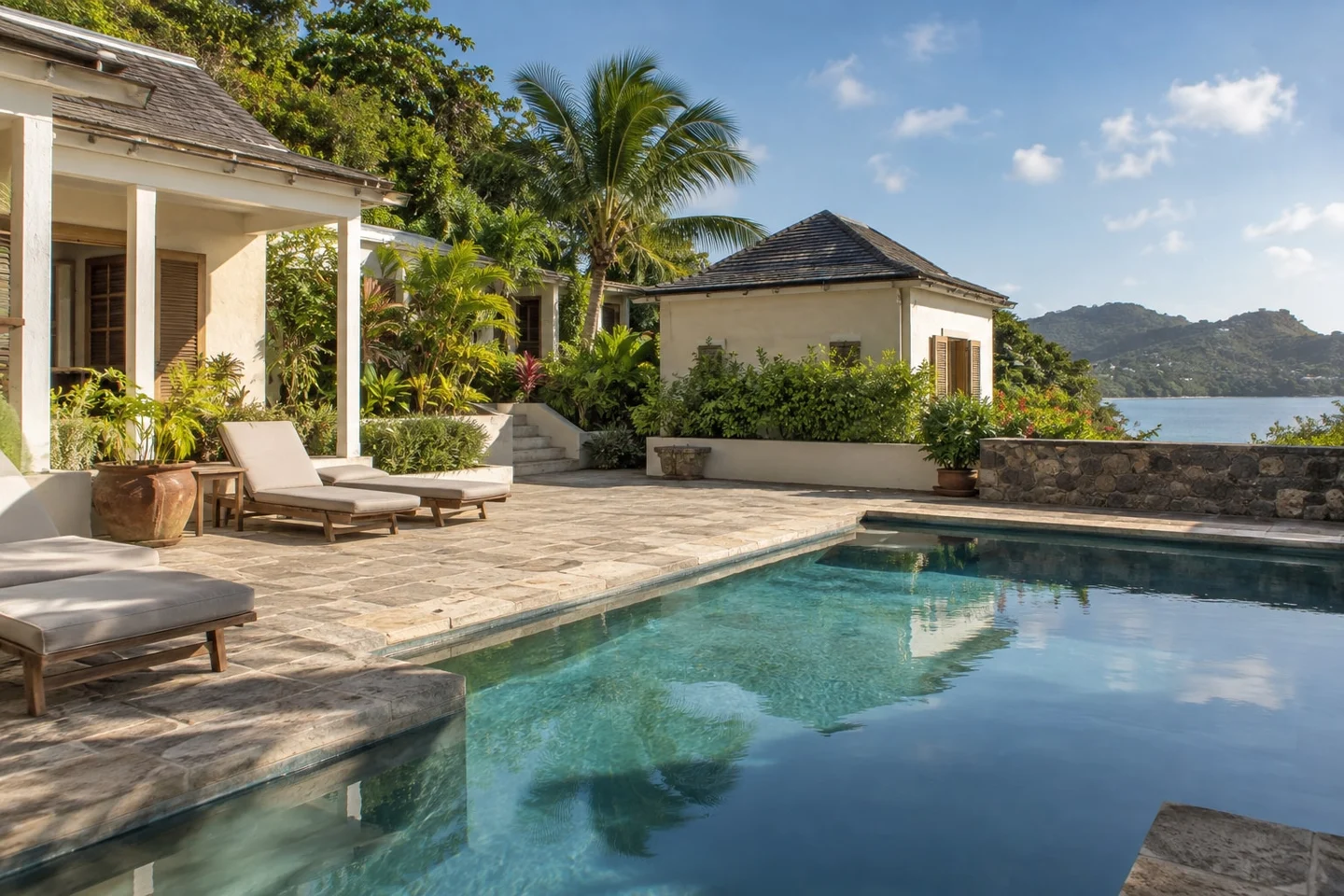
Where people actually buy
If the tax position pushes you towards approved developments, that largely means Grand Anse and its surrounds.
If you are happy buying a private home and paying the higher transaction cost, the island opens up:
- True Blue Bay. The place to be if you want reliable rental income from St. George's University students.
- Lance aux Epines. More residential, and a common choice for people who plan to spend real time here themselves.
- Westerhall and Fort Jeudy. Quieter, well liked by families.
- Grand Anse, back from the beach. There are some lovely houses on the hill overlooking it.
- Carriacou and Petite Martinique. For the properly adventurous. Reaching them means a ferry, and they are less developed, but they are charming, natural and friendly, and a lot of people fall hard for them.
Can foreigners buy? Yes, with one extra step
You can buy freely as a foreigner. What you need is an Alien Landholding Licence.
It takes three to six months, and in nearly every case it is granted. In all our years here we do not know of a single applicant being refused one. You submit documents to the government, you wait, you get approved to hold land as a foreigner.
It should not put anyone off. It is a process, not an obstacle, and it is neither especially onerous nor especially slow by the standards of buying abroad.
The rest of the process is unremarkable, and that is good news
Set the licence aside and buying in Grenada looks much like buying anywhere.
You will have a lawyer, the seller will have a lawyer, and between them they handle the paperwork, the searches and the transfer of funds through the banks. There are plenty of attorneys on the island who do this routinely and know exactly what they are doing.
There is not much to fear in the mechanics. The main thing is picking the right person to handle it for you.
What you will actually pay
Beyond the purchase price, budget for:
- Transfer tax, anywhere from 5 to 10 per cent for the buyer depending on where the property sits.
- Stamp duty to record your ownership, around 1 per cent.
- Legal fees, typically 1 to 2 per cent depending on the value of the deal and how hard you negotiate.
- A buyer's agent, only if you use one. Still fairly unusual in Grenada, common in America and increasingly so in England. If you have one, you will know it.
Annual property tax in Grenada is small enough not to be a factor in your decision. Worth checking on a specific property, but it will not change your maths.
Insurance deserves more thought. We always recommend full cover including hurricane. Grenada sits outside the hurricane belt, but you never quite know, and it costs less than people expect. What you pay depends heavily on the house: how it is built, what it is built from, the roof, and how close it sits to the water. As a real example, my own home is right by the water and I pay approximately 0.7% of the property's rebuilding cost each year.
Want the real numbers on a property you have seen? Send it over and we will price it properly. Talk to Tandem.
Rental income, honestly assessed
This is where we would rather be useful than optimistic.
Near the university. If your property is in True Blue or anywhere on the St. George's University bus route, students typically pay between US$1,000 and US$1,500 per room per month. Multiply by bedrooms and you have a fairly reliable figure. It is consistent income, and it is the most predictable rental market on the island.
Elsewhere, on holiday lets. Far more seasonal, and it depends on your house, your location and how easy it is to reach. Anyone quoting you a confident number without seeing the property is guessing.
Inside a managed development. The hotel runs the letting for you, collects the income and shares it on whatever basis the contract sets out, usually distributed annually.
Now the part we say to everyone, because it saves disappointment later. Think of the rent as covering your annual holding costs, and perhaps a couple of plane tickets a year. You get a home in the Caribbean, somewhere to retreat to, and it broadly pays for itself. If you come at this expecting a percentage return on capital, you will probably end up disappointed.
The best houses are often not advertised
At the upper end, most of the good stuff never reaches a listing.
Multi-million dollar homes change hands rarely here, and owners tend to hold them a long time. When they do sell, it is usually a private arrangement between buyer and seller, with no advertising and no public listing at any point. Sellers approach us directly wanting to find a buyer discreetly. It is a quiet corner of the market, and being in it is one of the genuine advantages of working with people who are actually on the island.
The advice changes depending on why you are buying
Three buyers, three different conversations.
Buying a family home. Location first, always. How close to a beach, to transport, to restaurants and shops. That question protects your investment more than any other. Lance aux Epines, Westerhall, Fort Jeudy and the houses set back from Grand Anse are the names that come up most.
Buying for rental income. If you are content with the student market, True Blue makes a great deal of sense. Consistent, reliable, and easy to model.
Buying to qualify for citizenship. Your choices narrow considerably, because only a handful of approved projects actually offer real estate for sale. Worth knowing before you fall for something that will not qualify.
Nobody expects you to know this from the outside
None of the above is obvious from a property portal, and most of it is not written down anywhere. Which transfer tax applies to your purchase, whether a development is approved, what a house will realistically let for, whether the asking price bears any relation to what things actually trade at here. That is local knowledge, and gathering it from abroad is close to impossible.
That is our job rather than yours. Tell us what you are looking for and we will tell you what it costs, what it is likely to earn, and where the catch is if there is one. If a property is wrong for you, we would rather say so early than help you buy it.
Talk to Tandem
Buying in Grenada is straightforward once you understand the two markets and the tax that separates them. Get that right and the rest is ordinary conveyancing with an extra licence attached.
If you are weighing up a purchase, Talk to Tandem. We have been buying, selling, building and running property on this island for twenty years, and we will give you an honest read on anything you are considering, including the ones we think you should walk away from. You can also reach us on WhatsApp or through our Contact page.
Buying property in Grenada: common questions
Can foreigners buy property in Grenada?
Yes. Foreign buyers need an Alien Landholding Licence. Your lawyer can explain the application and the requirements for the property you are considering.
What costs should I budget for when buying property in Grenada?
Consider transfer tax, stamp duty, legal fees and any buyer’s agent fee, as well as ongoing insurance, maintenance and property tax. Ask for a breakdown for the specific purchase, including any approved-development concessions.
Does every Grenada property qualify for citizenship by investment?
No. Buying an ordinary private home is not the same as investing in an approved citizenship project. Check the qualifying project and investment route before committing.