
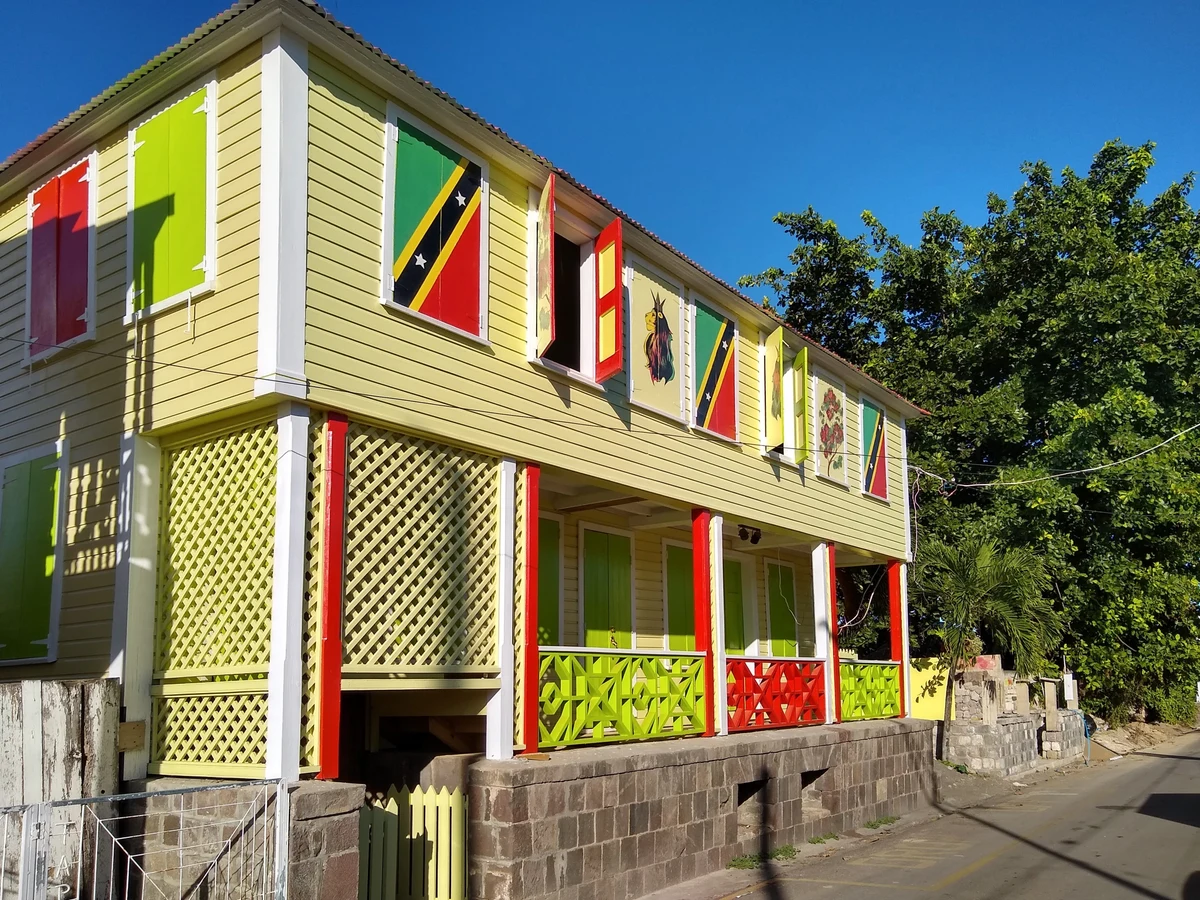
Across the five Caribbean citizenship programmes, real estate almost always means buying into a government-approved development. A share of a hotel, a unit in a resort, a fraction of something somebody else operates.
Saint Kitts and Nevis has a designated Approved Private Real Estate route. The minimum is US$600,000 for an approved single-family private home, or US$325,000 for an approved condominium unit or share. The particular property must be designated approved; buying an arbitrary house does not qualify.
If what you actually want is a home rather than an investment vehicle, that approved-private-property distinction is worth understanding before comparing the programmes.
Want to know which route fits your family? Talk to Tandem.
The options compared here, with the numbers
We covered the Public Benefit Option separately. Here we compare that option with the two real-estate categories. St Kitts also offers a Sustainable Island State Contribution; this is not an exhaustive list of every programme route.
The public benefit donation. From $250,000 for a family of up to four. You choose which of six named public projects your money funds. Nothing comes back.
Approved developer real estate. Minimum US$325,000, with a seven-year holding period.
Approved private real estate. Minimum US$600,000 for a designated single-family home, or US$325,000 for an approved condominium unit or share, with a seven-year holding period. Government and other applicable fees are additional.
Read St Kitts: where your donation actually goes for the related detail.
How the approved-development route compares with Grenada, honestly
Worth setting side by side, because this is the comparison people are actually making.
Grenada qualifying shared investment: US$270,000 minimum, five-year hold. This is not the asking price for every whole-owned property.
St Kitts qualifying developer investment: US$325,000 minimum, seven-year hold.
So on the approved real estate route St Kitts is both more expensive and longer. I am not going to dress that up. If approved-development real estate is what you want and price is what drives you, Grenada has the lower qualifying shared-investment minimum and the shorter holding period. That is not a promise of faster application processing.
That does not make St Kitts a bad option. It is still a perfectly good way to hold real estate in the Caribbean, and the seven years will pass regardless. But the straight comparison goes Grenada's way, and you should hear that from us rather than work it out later.
Read Grenada's approved citizenship projects for the related detail.
The approved private purchase route
This is the genuinely distinctive thing and it deserves its own section.
In the other four programmes, you cannot simply buy a house and apply. The purchase has to run through an approved development. That is the rule, and it narrows your choices to whatever handful of projects happen to be open and approved at the time.
St Kitts permits investment in designated Approved Private Real Estate. For a single-family home the minimum is US$600,000. Approval of the specific property must be verified before you commit.
The difference is about the kind of ownership available, not unlimited access to the whole market. An approved private home can give you title to a specific house rather than a share operated by somebody else. The approval, contract and permitted ownership structure still need checking.
$600,000 is a real step up from $325,000, and for a lot of people that settles it. But if you were going to buy a Caribbean home anyway, and you were going to spend somewhere near that figure, the qualifying investment may align with a purchase you were considering anyway. Citizenship remains subject to application approval. That changes the arithmetic completely.
Thinking about a home rather than an investment vehicle? That is a specific conversation and we are happy to have it. Talk to Tandem.
Which programme suits which family
The honest answer is that it depends on who is applying, and the variation is wider than most people expect.
Fees differ considerably with family composition, across every programme in the Caribbean and Europe alike. Some programmes work out better for a single applicant. Some are built around a family of four. Antigua has a University of the West Indies Fund option for families of six or more, which can be worth comparing for a larger family. That is a specific route, not a rule that every Antigua option includes six or that every other programme is limited to four. Compare the full quote and eligibility for the actual applicants.
I could give you a hundred worked examples and none of them would be yours. So rather than that: tell us who is in your family, who wants to be on the application, and what you are actually trying to achieve. In consultation with our regional, licensed partners, we will tell you which route is most suitable.
Regional standards do not make the programmes identical
This surprises people, and it is worth knowing before you spend time comparing things that no longer differ.
The five programmes share a direction towards stronger regional standards, including due diligence and anti-money-laundering safeguards. The Eastern Caribbean Citizenship by Investment Regulatory Authority (ECCIRA) provides regional oversight. National eligibility rules, document requirements and processing times still need checking separately.
Do not assume one programme offers easier vetting or a guaranteed faster decision. Ask about cost, the applicable national rules, what you end up holding and what the passport actually reaches.
St Kitts was first, and has been at this for forty years
St Kitts and Nevis launched its citizenship by investment programme in 1984. It was the first, and has been running for over forty years.
That brings real experience and a wider international reputation than the others have had time to build.
Does it make the programme better? I do not think so. Does it make it worse? Also no. It is a differentiator rather than an advantage, and I would be wary of anybody selling it to you as more than that.
A long history, and stronger safeguards
St Kitts has faced challenges over its long history. In Mark’s view, it has addressed those challenges and strengthened the programme as a result. Current due diligence and eligibility requirements still need checking before an application.
No comparison table is going to answer this for you
Everything above is structure. What it cannot tell you is which of these is right for your family, because that turns on who is applying, their ages, what you want to own at the end, and whether you are buying a home or buying a route.
That is a half-hour conversation and it costs you nothing. In consultation with our regional, licensed partners, we will go through the options discussed here and Grenada’s three practical investment options within its two official routes, tell you what each one genuinely costs once every fee is counted, and tell you plainly when the cheapest option is not the one we earn most from.
If the answer turns out to be a programme we do not act for, we will say so and point you at someone who does.
Talk to Tandem
The options compared here: a Public Benefit contribution from US$250,000, approved developer real estate from US$325,000, or designated private real estate from US$600,000 for a single-family home and US$325,000 for an approved condominium unit or share. Property investments have seven-year holding periods; qualifying Grenada shared investments have a five-year period. Fees are additional.
Grenada has the lower qualifying shared-investment minimum and shorter holding period. St Kitts also offers the designated approved-private-property category. Which matters more depends entirely on what you are trying to end up with.
Talk to Tandem and, in consultation with our regional, licensed partners, we will price your actual family across both countries. You can also reach us on WhatsApp only or through our Contact page.
How Tandem helps: our programme licence is in Grenada. For St Kitts we introduce you to our regional, licensed partners and stay involved with concierge support throughout the process.
Qualifying property rules checked against CIU Approved Private Real Estate and approved developer real estate; programme history: CIU’s 1984 establishment; family comparison: Antigua’s UWI Fund option; regional context: ECCIRA. Revised and checked 13 October 2026.
Frequently asked questions
Can any private house qualify for St Kitts citizenship?
No. The particular property must be designated Approved Private Real Estate. Approved single-family homes have a US$600,000 minimum; approved condominium units or shares have a US$325,000 minimum. Additional fees and application approval still apply.
What holding period applies to St Kitts qualifying property?
The official real-estate routes discussed here require a seven-year holding period. Do not confuse the holding period with application processing time or a guaranteed resale.
Are headline investment minimums the total cost?
No. Government, due diligence, processing, passport, agent and applicable banking or legal fees need an individual written quote. The Public Benefit example in the linked article must not be applied unchanged to a property application.