
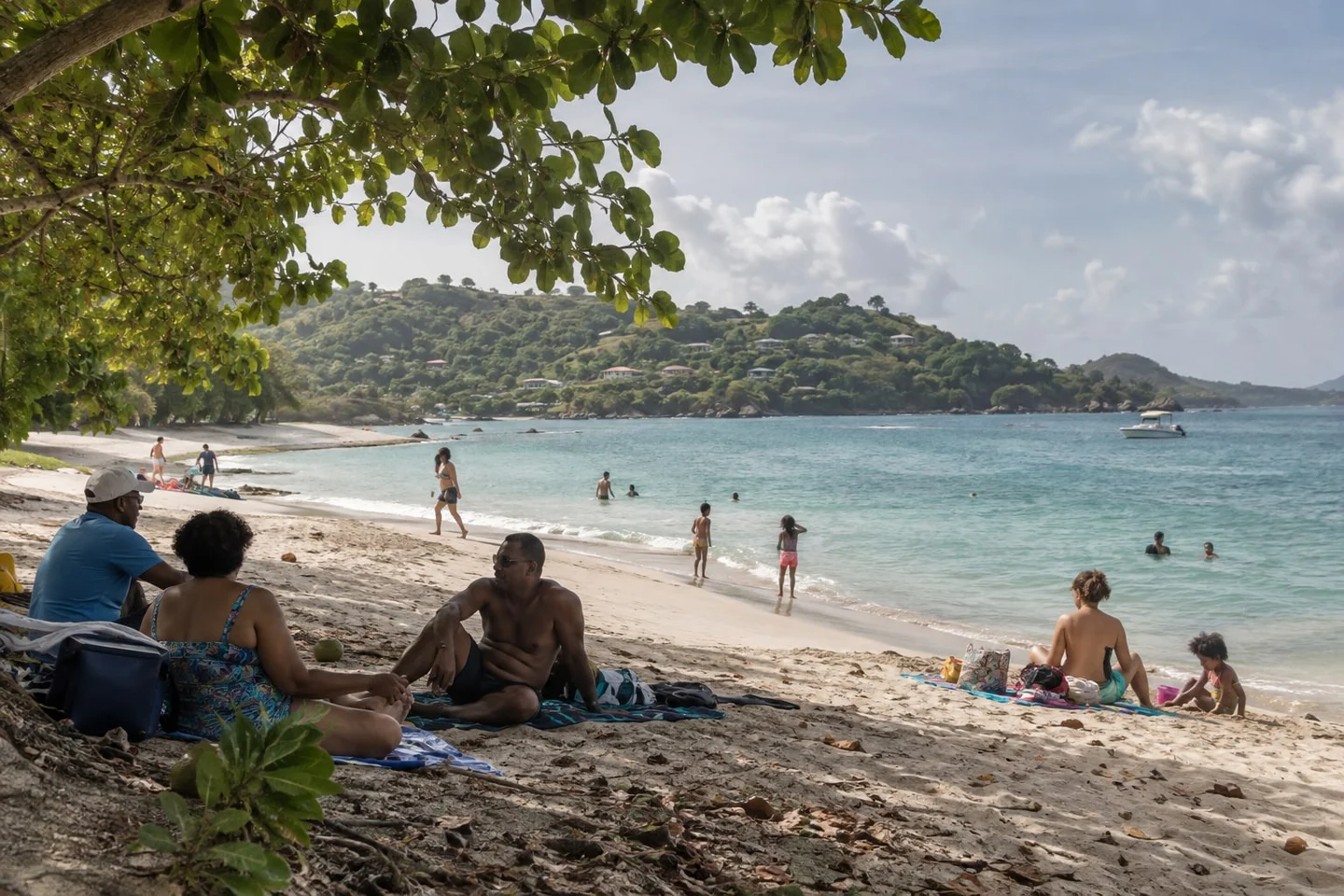
Ask what it is like to live in Grenada and you tend to get a brochure back. Beaches and sunshine, and nothing you could plan a life around.
I moved here in 2006. Twenty years, a family, a business, children who have grown up on this island. What follows is what I would tell a friend who was actually thinking about it, including the parts that might put them off.
Thinking about it seriously? Ask us the awkward questions. Talk to Tandem.
The lifestyle is outdoors, and it is social
This is the part I would not trade.
We are on the beach, on boats, up in the hills, swimming in rivers and under waterfalls. I cycle and I run. The thing that surprises people is that there is always someone to do it with. There are groups for everything here, and they will absorb you within a fortnight. The Grenada Hash House Harriers, the mountain bikers, the road cyclists.
If your thing is the water rather than the hills, there is fishing, sailing and some of the better diving in this part of the world.
Eat where local families eat
A word on food, because expectations matter here. Do not come looking for fine dining and white tablecloths. That is not Grenada. What Grenada has instead is great local cooking, local ingredients, family recipes, in places you find by asking someone rather than by searching. It is fresh, it is good for you, and it is affordable. If you arrive wanting the food you left behind, you will be disappointed by something that was never trying to be that in the first place.
What struck me first was the welcome
Twenty years on, this is still what I would put at the top of my recommendation. Grenadians are warm and open in a way that caught me off guard. From my first weeks I never felt I was imposing, or taking up someone else's space, or being politely tolerated. People want to know how you ended up here, and they ask because they want to know.
I am aware that "friendly and welcoming" is exactly the sort of thing you would expect to read in an article like this. I am saying it anyway, because after two decades it is the observation I would most strongly defend.
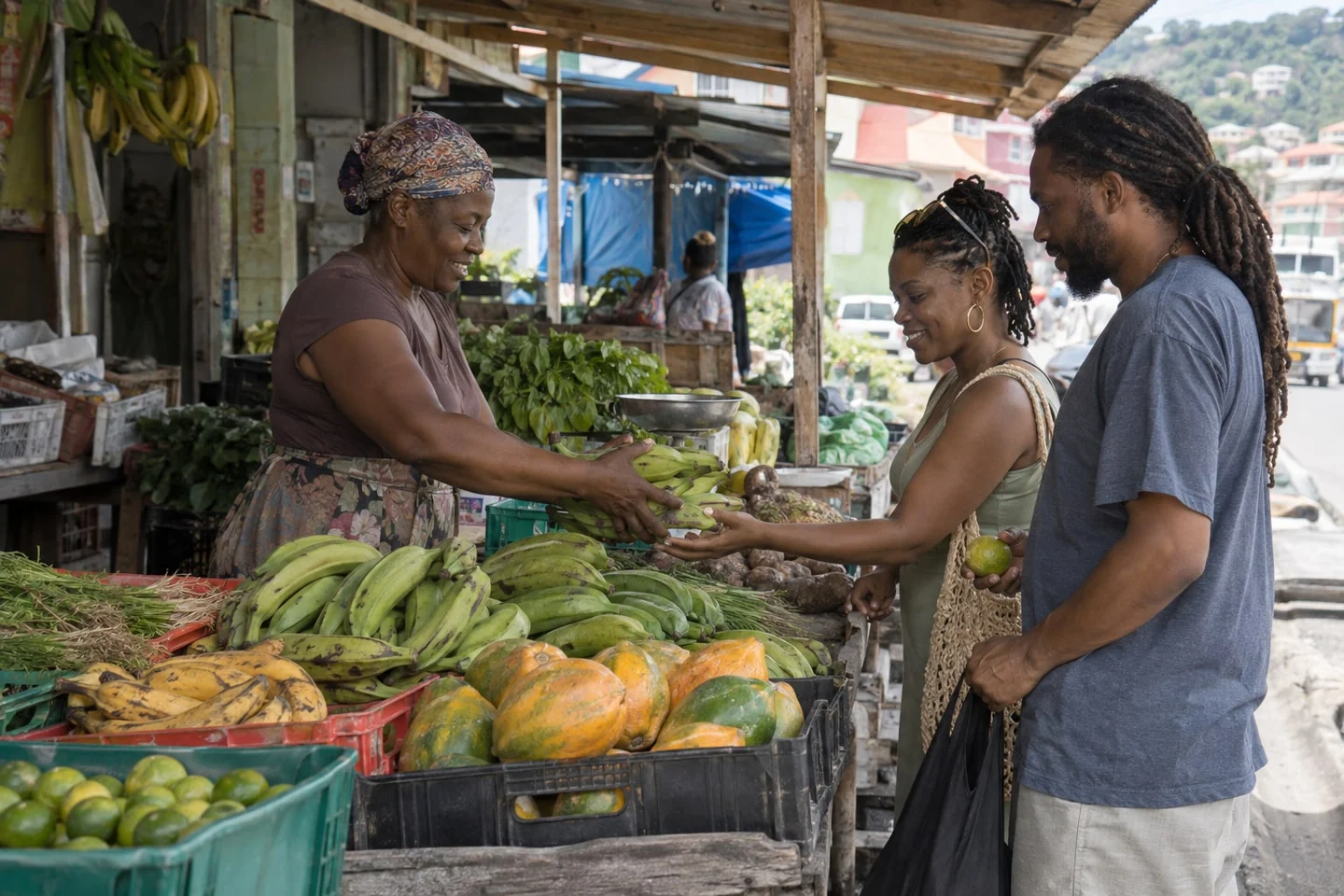
"Expensive" depends entirely on how you live
People say the Caribbean is expensive. It can be. It very much does not have to be, and this is where the honest answer parts company with the perceived wisdom.
Shop in the markets, buy local, resist the urge to import your old life wholesale, and you can live here comfortably for well below what the same life costs in a major Western city.
I am writing this from London, where stepping out of the front door seems to cost money before I have done anything at all. New York was the same when I was there recently. A taxi, a lunch, one ordinary errand, and the day is gone. Month to month in Grenada I eat better, live better and spend less than I do in ‘Metropolis’.
The catch is real, though. If you insist on imported brands, and an imported lifestyle, Grenada will charge you handsomely for the privilege. Most of what people call the cost of living here is determined by choice.
Safety, and the ‘auntie’ thing
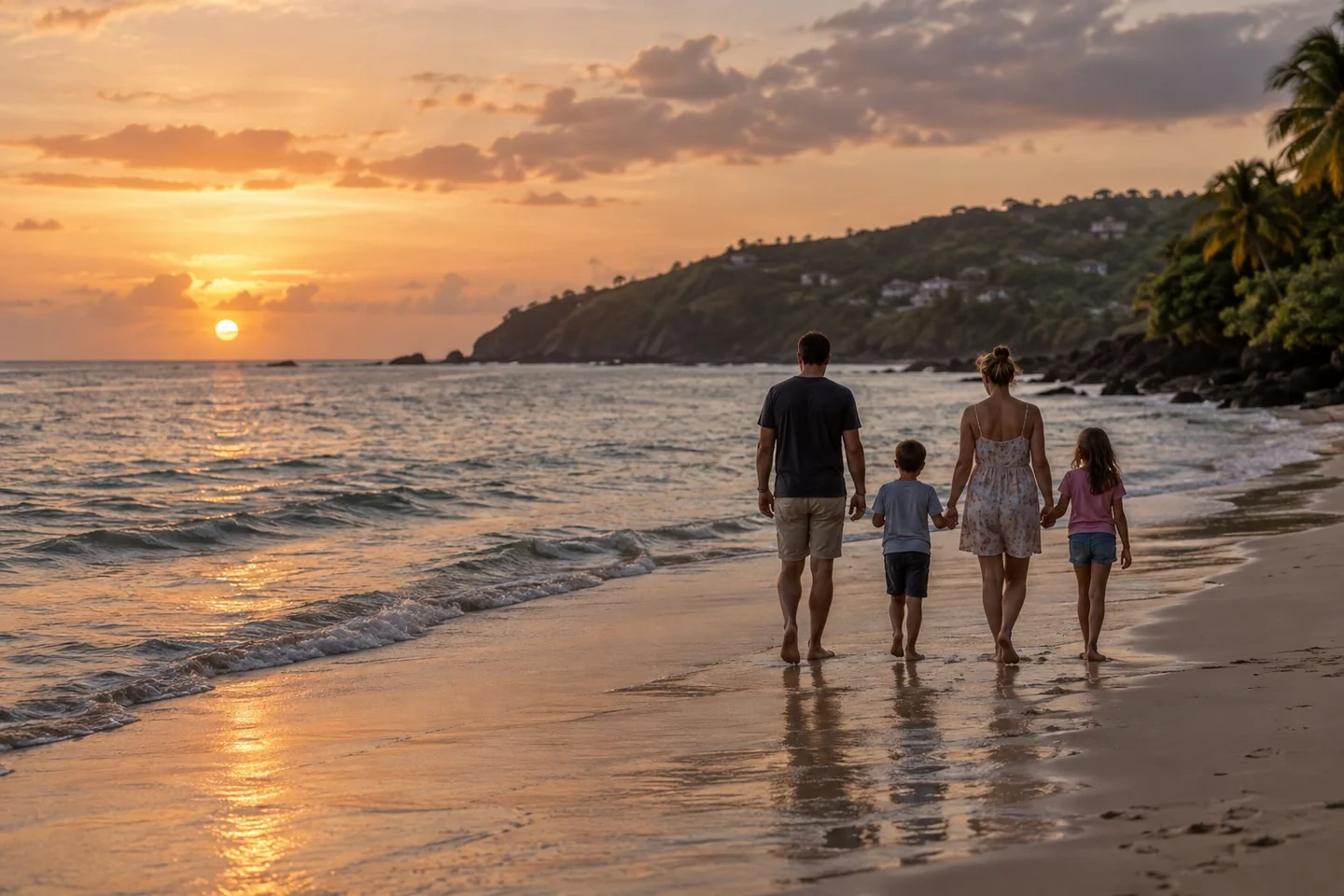
I am raising children here. That is the most useful answer I can give. They enjoy a freedom I could not have given them elsewhere. They play on the beach, they swim in the sea, they go out on boats. There is a joke here that everybody on the beach is somebody's auntie, and there is quite a lot of truth in it. Other people watch out for your children as a matter of culture.
You can go out for dinner, walk back, shop, get on with your evening without calculating the risk that other places demand.
Common sense still applies. I would not walk down an unlit beach on my own at two in the morning, but then I would not do that anywhere. Take the sensible precautions you should take anywhere and Grenada will feel safer than other places you have lived.
Healthcare, and how far you are from more
There are good doctors here and good facilities. The general hospital serves the island and handles emergencies. There is also a private clinic, St. Augustine’s Medical Services, known to everyone as SAMS, which covers general practice and minor surgery to a standard I have had no complaints about.
For anything serious that needs a larger hospital, the geography works better than people assume. Trinidad is an hour away. Barbados is an hour away. Miami is just three. You can get from here to a major American hospital faster than you can from some remote parts of America.
Two things I would say to anyone. If you live here, carry proper medical insurance. If you are visiting, carry travel insurance that includes medical cover. Most travel agents will offer it, and some credit card providers include it. Give yourself the peace of mind it provides.
Schools, and I should declare an interest
I am biased on this one. I have believed in the Montessori approach for a long time. When I arrived twenty years ago there was no Montessori school on the island, so I started Island Montessori School. It has gone from a handful of children to around 150 students today. From being a Montessori primary school, it is now a certified Cambridge IGCSEs and A-levels centre and we cater to children from 3 years until they graduate at 18. Also worth mentioning that it is a registered charity and operates as a not-for-profit. I am proud of it but I am not going to pretend it is the only option.
The traditional Westmorland School has been part of the island for many generations, and there are several church schools with their own strengths. For an island this size, parents have more real choice than you would expect.
The frustrations, and they are smaller than you think
I was asked to be honest about what annoys me, and the truthful answer is that not much does. But there are things. Something on the supermarket shelf this week may simply not be there next week. The fix is to avoid becoming dependent on any one product, which sounds like a nuisance and turns out to be a small adjustment.
Traffic and other drivers can be baffling, although I would say the same about most countries I have driven in. Some government processes move slowly but I am currently trying to get things done in the United Kingdom and finding that considerably worse.
Almost all of it dissolves if you adjust to the pace. You have to live on island time, which is not a hardship anyone should struggle with. Slow down, expect less, enjoy the wait. This life is not a rehearsal, and Grenada is unusually well set up for the business of enjoying the day you are actually in. Practice being a ‘Human Being’ rather than a ‘Human Doing’.
Utilities, and a comparison that surprises people
People worry about this more than they need to. I kept a home in South Carolina for years, and I used to find that my power and internet in Grenada was more reliable than there. We do not really have blackouts. If the power goes off, it is usually back inside ten minutes. Water, electricity and connectivity are all properly covered. You can live and work here, be online 24 hours (if you need to be) without concern.
Hurricanes are real, and I am not going to soften it
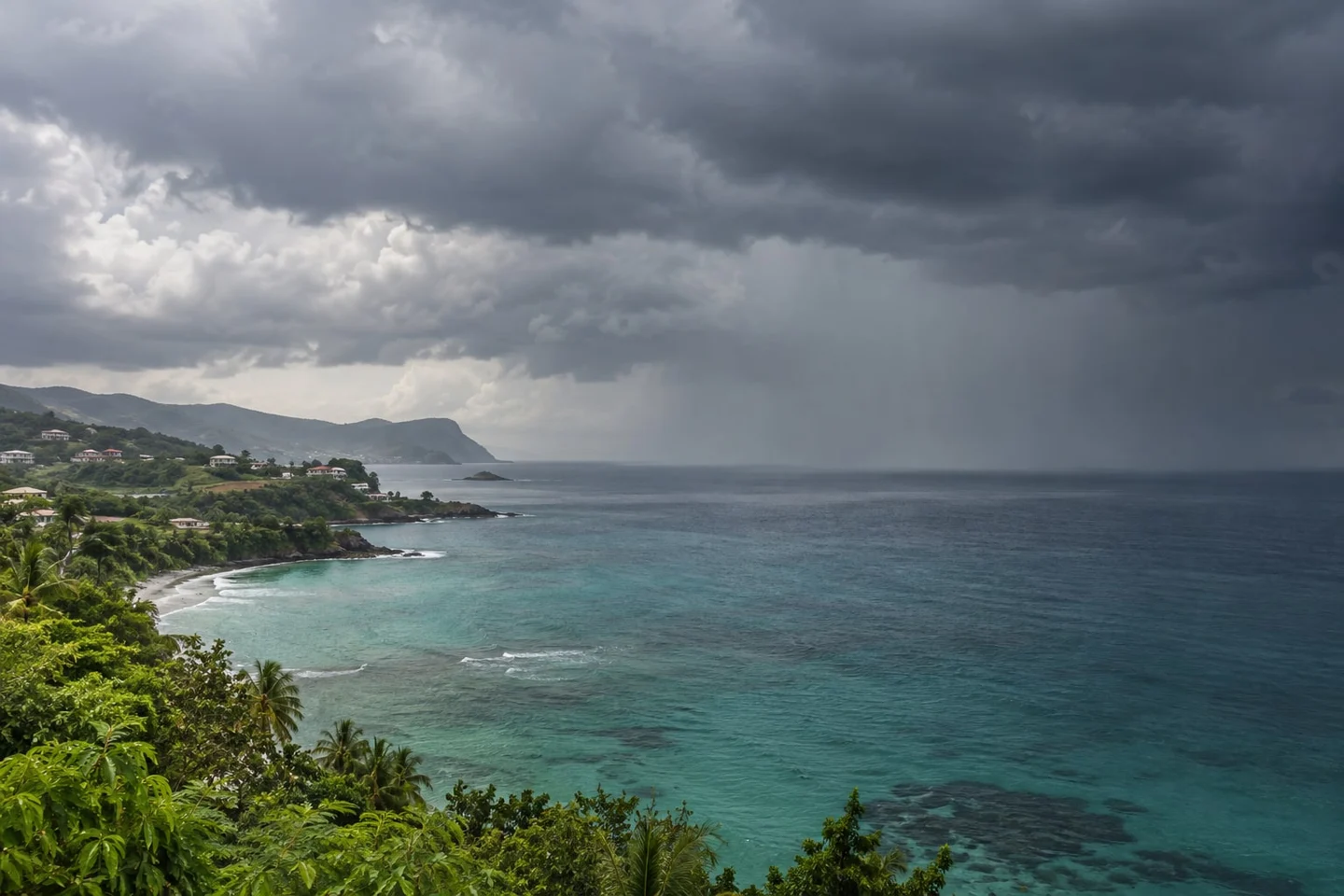
The Atlantic hurricane season runs from 1 June to 30 November. Grenada sits outside the southern edge of the belt and the historical risk here is genuinely low. There have been very few over the decades, but low is not none. In 2024 Hurricane Beryl hit our sister island of Carriacou very hard indeed. The damage was severe and people there are still recovering from it. Anyone who tells you the risk in Grenada is zero is not being straight with you.
What I would say is that you should look at the rest of the world today. The fires, the floods, the earthquakes, the landslides. Hurricanes are seasonal and well understood. If you prepare properly there is little to fear.
Locals and expats actually mix
This is where Grenada differs from most places I have spent time.
There are not local places and expat places here. Same restaurants, same beaches, same activities. Kick a football about on the sand and local kids will join in. The trick, if there is one, is to blend in rather than import. Say yes to things. Arrive with the right frame of mind rather than expecting the island to change for you.
Before you decide anything, come and see for yourself. All of the above is one person's twenty years of experience. But for you, the best experience to benefit from will be your own.
At Tandem, we run our own travel and concierge team for exactly this. Flights, somewhere to stay, site visits, and the things worth doing while you are here, all arranged in house so you are not building a research trip from four time zones away. We will show you the parts that never make it onto a website, put you in front of people already living the life you are weighing up, and answer the questions you have not thought to ask yet.
If Grenada turns out not to be for you, that is a useful thing to learn. We would far rather you found out on a five-day visit than after a purchase.
Talk to Tandem
Twenty years is long enough to know a place and long enough to be honest about it. Grenada is not paradise, because nowhere is. It is a friendly, unhurried, outdoors island where a family can live very well without spending a fortune, and where the welcome is real.
If that sounds worth looking at properly, Talk to Tandem. We will tell you what living here is actually like. Discuss your concerns with us and we will be honest. You can also reach us on WhatsApp or through our Contact page.
Living in Grenada: your questions
What is the cost of living in Grenada?
There is no single monthly budget that fits everyone. Mark finds that buying local food and shopping in the markets costs less than maintaining an imported lifestyle. Housing, insurance and your household’s needs should be priced separately before you move.
Is Grenada safe to live in?
Mark describes raising his family in a supportive community and enjoying an outdoor lifestyle. This is his personal experience, not a safety guarantee. Sensible precautions still matter, including avoiding isolated, unlit places at night.
What healthcare should I plan for when moving to Grenada?
The island has a general hospital and private services, including SAMS. Mark recommends medical insurance for residents and travel insurance with medical cover for visitors. Check the facilities, cover and arrangements appropriate to your own needs before moving.
What are the school options for families living in Grenada?
Mark discusses Island Montessori School, which he founded, alongside Westmorland School and church schools. Families should contact schools directly about current places, age groups, curriculum and fees.
When is hurricane season in Grenada?
The Atlantic hurricane season runs from 1 June to 30 November. Hurricane risk is not zero: the article discusses Beryl’s impact on Carriacou in 2024. Follow official weather advice and make a preparedness plan.