
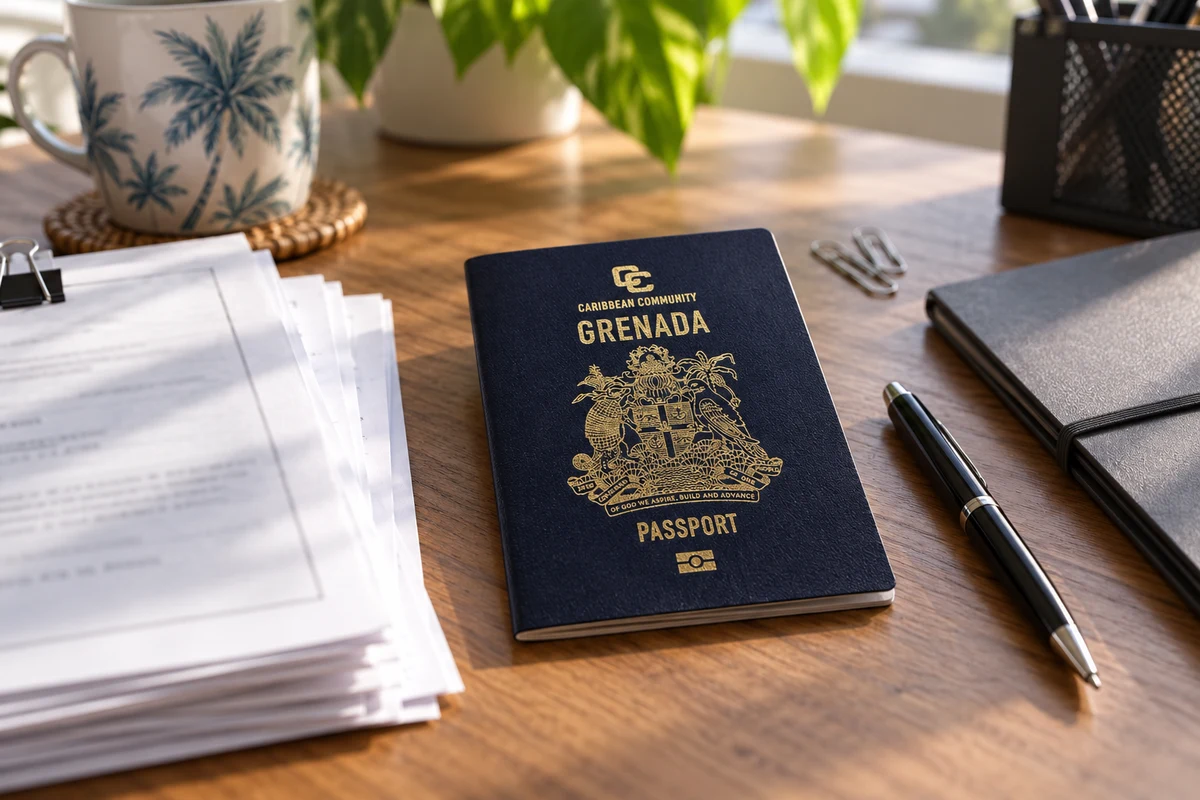
Most people assume the slow part of this process is the government.
In our experience it is not. The slow part is usually the two or three months it takes a busy person to sit down and gather their own paperwork. Once a complete file goes in, things move.
So here is the whole list, what each item is for, which two documents cause nearly all the delays, and what the interview is actually like now that it exists.
Want the list for your own family rather than the general version? Talk to Tandem.
There are two halves to this: forms, and evidence
The forms are provided by the government. There are six standard ones, plus an interview form, a letter of authorisation and an attestation form. Then, once you are approved, a passport application form and the oath of allegiance.
You do not have to find any of these or work out which is which. They have to be completed and submitted by a licensed agent, so once you retain one, they hand you the set and walk you through filling them in. That part is genuinely not your problem.
The evidence is the part that is your problem, and it is the rest of this article.
Everything you will be asked to produce
All of it as certified colour copies, and all of it for every applicant on the file, not just the main one.
- Every page of all current passports. Every page, including the blank ones.
- All identity cards.
- Birth certificates.
- A bank reference letter and a professional reference letter.
- Education certificates at your highest level. If you hold a master's, they want a certified colour copy of the master's.
- A police certificate. More on this below, because it is rarely just one.
- Proof of address. A utility bill, a lease or a rental agreement.
- Source of funds evidence. The big one, covered separately below.
On source of funds, the supporting material depends on where the money sits. Funded personally, they want twelve months of your personal bank statements. Funded through a business, they want twelve months of corporate statements, plus the company's financial statements and its ownership documentation, including shareholder registers.
Children, parents and grandparents do not bring extra requirements with them. The same forms, the same documents, for each person on the application.
The two documents that cause almost every delay
If an application is going to stall, it will usually stall on one of these.
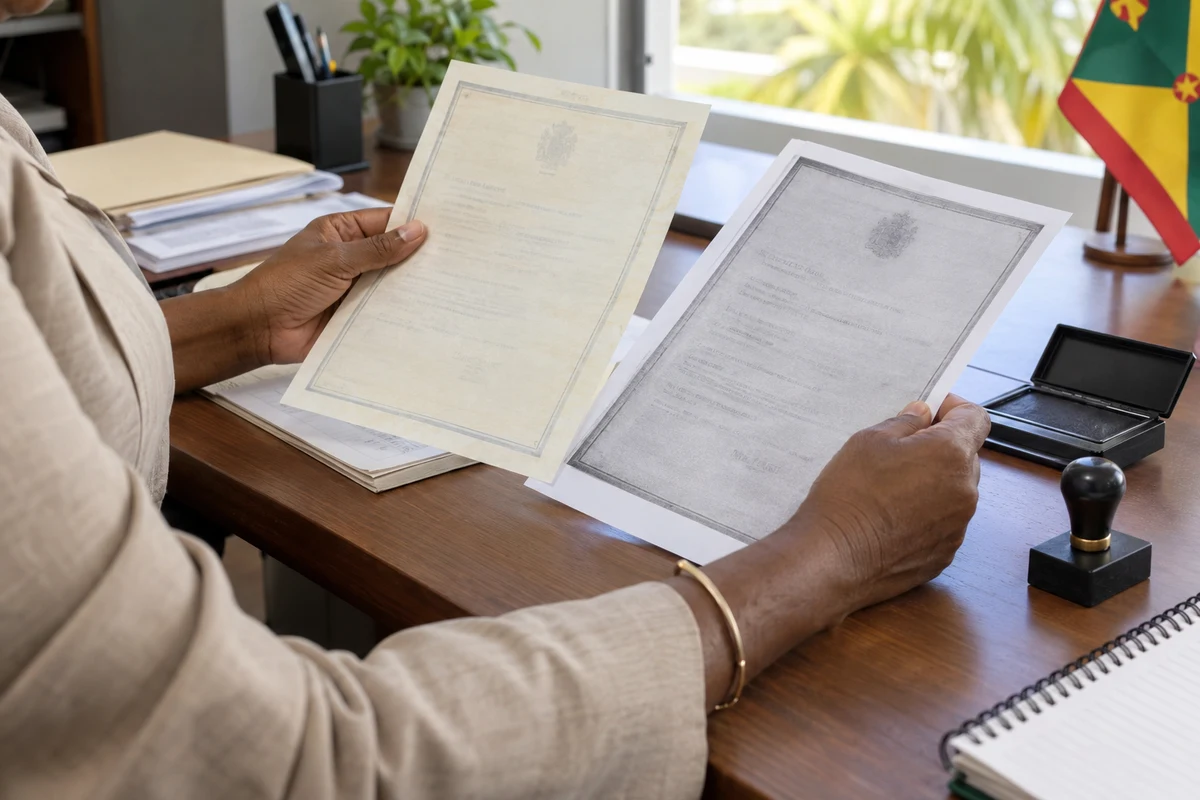
Birth certificates. It depends entirely on where you were born and whether you still live there. For somebody born and living in the same place it is a relatively simple exercise. For people from China it can be genuinely difficult: in some cases they have to travel back to their home town in person to apply for it. In some jurisdictions a relative can act for you.
Police certificates, which are rarely singular. You will need one from:
- the country of your birth
- your current country of residence
- any country you have lived in for a year or more during the past ten years
- any country where you hold citizenship
- Grenada itself, if you have already spent time here
People with two or three homes who genuinely split their time need certificates covering all of those places. Each one runs on its own timetable in its own country, and they do not run in parallel unless you start them in parallel.
If you take one practical thing from this article, make it this: start the birth certificate and the police certificates first, before anything else, on the day you decide to proceed. They are the long poles. Everything else can be done in a week.
Read What Grenada citizenship actually costs for the related detail.
Source of funds, which is the one nobody can hand you
This is the most complicated item on the list, and the reason is structural. Everything else is a document you already have or a form you can complete. Source of funds is an argument you have to build, and what it looks like depends on how you came by the money.
The Government looks at five main headings. These are a starting point, not a definitive evidence list. Every case is different, and answers can lead to further questions.
Company ownership or corporate profits. Corporate documents and tax returns.
Employment or salary. Payslips, and a letter from your employer confirming the money accumulated through your employment.
Sale of real estate or other assets. The sale agreement, and banking documents showing the proceeds arriving with you.
Investments or crypto liquidation. Brokerage statements, exchange logs, or whatever else demonstrates how the funds reached you.
Inheritance or gifts. Probate documents, a notarised deed of gift, or evidence of the donor's own source of wealth.
Most people are a combination of two or three of these rather than a clean single category, which is fine. What is not fine is a gap. The question being asked is not "are you wealthy", it is "can you show the path the money took", and a path with a missing section is where files get held up.
Not sure how your source of funds would be evidenced? That is the conversation worth having before anything else. Talk to Tandem.
The interview, which is newer than most articles about it
This is the final stage of due diligence. Which means something quite reassuring: if you have reached the interview, your due diligence has already gone well. Nobody gets to this point with a problem sitting unresolved behind them.
It is conducted online, by video call. It applies to every person on the application aged seventeen or over. If the applicant does not speak English, translators can join the call, but that has to be arranged in advance rather than raised on the day.
It is a fairly straightforward conversation. We have had clients through it since it came in, and the only difficulty we hit was early on, when a translator failed to turn up. That is the worst thing that has happened. Nothing alarming, no red flags, no trick questions.
How to prepare: barely at all. Go in with an open mind and answer honestly and directly. Direct answers are always the best ones. The interviewer is not trying to catch you out, and over-rehearsing for it is more likely to make you sound evasive than prepared.
The real timeline, from our own files
I want to be careful here, because published processing times in this industry are frequently optimistic, and these are not official figures. This is what we see, not what anybody promises.
Two to three months for the client to assemble the file. This is the big one and it surprises people. Everybody has a job and a life, and getting certified copies of passports, identity cards, education certificates and everything else takes longer than anyone plans for.
One to two weeks for bank clearance, assuming no questions on source of funds.
Around 90-120 business days from the local agent submitting a complete file to approval, provided there are no omissions and no errors.
Where it actually goes wrong
There is no single point in the process where things predictably become delayed. Every file is a little different.
What is true is that a complete file without errors has no particular reason to be held up, and an incomplete one can lose weeks or months. The delay compounds, because it depends both on how quickly you respond to the query and on when the board next sits. Miss a sitting and you are waiting for the next one.
Which brings the whole article back to the same point. The quality of the file you submit determines almost everything about how long this takes.
You are not allowed to do this alone, and you would not want to
It is worth being completely clear about this, because people do ask.
You cannot submit an application yourself. By law you must use a licensed marketing agent and a licensed local agent. (Tandem provides both)
If it is not us, it will be somebody else, but it will be somebody. Nobody goes this alone.
Even if that were not the rule, I would not recommend it. Doing this from another country, without knowing Grenada and its particular habits, would be a daunting exercise for somebody who has not handled these files before. The forms are the easy part. Knowing what a reviewer will query before they query it is the part that takes years.
So the question is not whether to use an agent. It is which one, and whether they will tell you the truth about your chances before you spend anything.
Read How to choose a Caribbean citizenship agent for the related detail.
Talk to Tandem
None of this is difficult. It is just long, detailed, and unforgiving of gaps. Get the birth certificate and the police certificates moving on day one, build the source of funds story properly, and the rest is administration.
If you want the document list mapped to your own family, with the police certificates you specifically will need and an honest view of how your source of funds would be evidenced, Talk to Tandem. You can also reach us on WhatsApp only or through our Contact page.
Frequently asked questions
What documents are required for a Grenada passport by investment?
The article covers agent-provided forms and certified evidence for each applicant: passports, identity cards, birth certificates, reference letters, education certificates, police certificates, proof of address and source-of-funds evidence. Your agent should map the exact requirements to your circumstances.
Who attends the Grenada citizenship interview?
The video interview described here applies to applicants aged seventeen or over. Translators can join where needed but must be arranged in advance.
How long does the document process take?
Tandem’s experience is two to three months for client document gathering, one to two weeks for bank clearance and around 90–120 business days from submission of a complete file to approval. These are separate experience-based stages, not official promises or a combined completion deadline.